Historic Emergency Oil Release Fails to Calm Markets as Crude Prices Continue Climbing
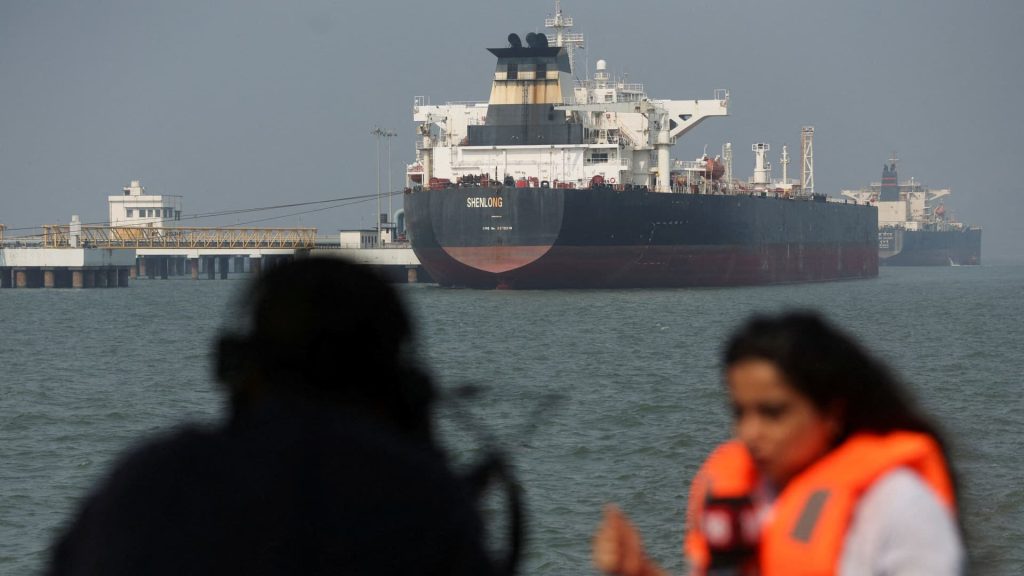
Global oil markets demonstrated this week that even the largest coordinated release of emergency petroleum reserves in history cannot adequately address the severe supply disruptions caused by ongoing Middle Eastern conflicts.
Over thirty countries spanning Europe, North America, and Northeast Asia have committed to releasing 400 million barrels of crude oil onto global markets in an attempt to stabilize escalating energy costs. The United States is spearheading this initiative, contributing 172 million barrels from its Strategic Petroleum Reserve, which represents 43% of the total International Energy Agency commitment.
This coordinated action marks the most substantial emergency oil release in the IEA’s five-decade existence, as the organization works to safeguard member nations’ energy security during international crises.
However, financial markets remain unconvinced by this unprecedented intervention. Crude oil prices have jumped over 17% since the IEA’s Wednesday announcement of the emergency stockpile deployment. Brent crude, the global pricing benchmark, has maintained levels above $100 per barrel for consecutive trading sessions.
According to Tamas Varga, an analyst with London-based oil brokerage PVM, the reasoning behind continued price increases is straightforward. Maritime vessels face attacks in Persian Gulf waters, the crucial Strait of Hormuz shipping channel remains effectively blocked, and Iran’s leadership has pledged to maintain the closure of this vital trade route.
Tom Liles, senior vice president of upstream research at Rystad Energy consulting firm, emphasized that policy measures will have minimal effect until normal shipping operations resume through the strait.
Before the current conflict, Saudi Arabia, Iraq, Kuwait, and the United Arab Emirates collectively exported approximately 14 million barrels daily, Liles noted. Alternative export routes through Saudi and UAE pipelines connecting to the Red Sea and Gulf of Oman can handle between 5 million and 6 million barrels per day.
This situation leaves roughly 9 million barrels per day—approximately 10% of worldwide oil supply—dependent solely on Strait of Hormuz transit and therefore trapped in the region until shipping normalizes. While the 400 million emergency barrels could theoretically compensate for about 40 days of this lost production, the reality proves far more complex.
Liles explained that physical limitations prevent immediate market flooding with the entire emergency reserve. The actual release occurs gradually over extended periods rather than instantaneously.
Analysts at Bernstein informed clients in a Thursday research note that the war-related supply disruption significantly exceeds the IEA’s daily release capabilities, limiting the intervention’s impact on oil price trajectories.
The American contribution will be distributed over 120 days, equating to 1.4 million barrels daily—merely 15% of the supply lost due to the Hormuz blockade. Additionally, a 13-day delay exists between presidential authorization and actual market delivery.
The IEA has not specified release schedules or volumes for other participating nations, stating that each of its 32 member countries will determine appropriate timing and quantities based on individual circumstances.
The organization’s most recent emergency action occurred during Russia’s Ukraine invasion. Member nations achieved a combined peak release rate of 1.3 million barrels per day in September 2022, according to Rapidan Energy consultancy. Rapidan estimates the IEA could potentially increase release rates to approximately 2 million barrels daily.
Bernstein analysts concluded that while the action provides temporary relief, it fails to resolve the underlying crisis.
Liles suggested that oil prices might reach demand-destroying levels before the stockpile release reaches full effectiveness. Rystad projects that a two-month conflict would drive Brent crude to $110 per barrel by April, while a four-month war could spike prices to $135 per barrel by June.
The coordinated release also risks significantly depleting member nations’ strategic reserves. The planned 400 million barrel release represents one-third of the 1.2 billion barrels held in member-state stockpiles. The U.S. contribution alone accounts for 41% of the 415 million barrels currently stored in America’s Strategic Petroleum Reserve.
Energy Secretary Chris Wright announced Wednesday that the administration plans to replenish released oil with 200 million barrels within twelve months at no taxpayer expense.
The IEA intervention does not address the separate crisis affecting liquefied natural gas exports, with 20% of global LNG shipments unable to reach markets due to the strait closure. This impacts electricity generation and heating fuel supplies worldwide.
Tobin Marcus, head of U.S. policy and politics at Wolfe Research, acknowledged that while stockpile releases will partially mitigate the oil supply shock, they cannot eliminate the fundamental need to reopen the Strait of Hormuz, and additional assistance options appear limited.