Bigme B251 Color E Ink Display Falls Short of Expectations
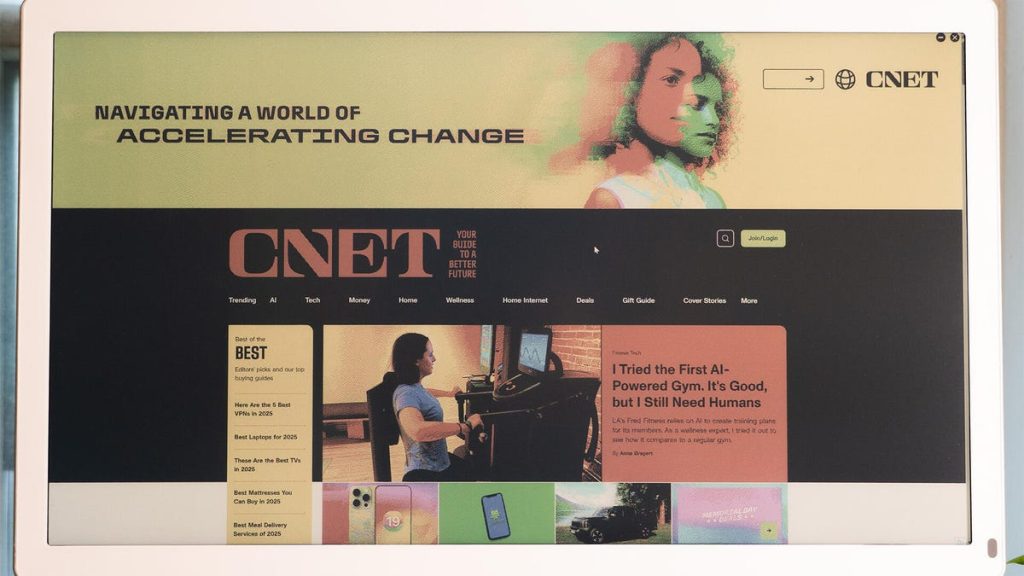
Electronic ink technology has evolved significantly, finding applications across various devices from compact reading devices to full-featured Android tablets with color capabilities. The appeal of displays that function without glowing backlights is undeniable, offering reduced eye fatigue, eliminating blue light concerns, and providing excellent visibility even under direct sunlight.
The Bigme B251 attempts to capitalize on this appeal with its 25.3-inch color E Ink display. While the concept appears promising, the $1,499 price tag creates high expectations that this monitor struggles to meet.
Display Performance Disappoints
Although this represents a first encounter with an E Ink monitor specifically, extensive experience with various E Ink devices reveals significant improvements in black-and-white contrast over recent years. However, E Ink displays incorporating color layers continue to lag behind their monochrome counterparts. The B251 employs a color LCD layer positioned over the E Ink base, which substantially reduces overall brightness.
E Ink’s fundamental advantage lies in utilizing ambient lighting to illuminate content, eliminating the need for built-in backlighting found in conventional monitors. Unfortunately, the color layer dims the display considerably, requiring additional lighting unless positioned directly against bright windows.
Even in well-lit environments near sunny windows, the B251 proved too dim without its integrated lighting system. While this lighting provides gentle illumination with adjustable color temperature, it undermines the core E Ink advantage.
Despite the 3,200×1,800 resolution across 25.3 inches appearing adequate on paper, clarity issues persist due to the color layer and ghosting effects. Text sharpness disappoints even with black-and-white content, displaying noticeable pixelation. The manufacturer claims 300ppi E Ink resolution and 150ppi color resolution, but side-by-side comparisons with a 15.3-inch 1200p display reveal inferior sharpness on the Bigme unit.
The monitor offers multiple image modes optimized for different content types, including web browsing, text, images, and video. Each mode provides contrast and saturation adjustments but locks refresh rates. The image mode delivers optimal clarity but operates at an extremely slow refresh rate of approximately 1Hz, making cursor movement nearly impossible. Video mode provides smoother operation but creates severe blotchiness, with ghosting artifacts persisting permanently unless pixels receive new content.
Text and web modes strike a middle ground but remain unsatisfactory. Excluding image mode, all others rely heavily on dithering, producing a messy, grainy appearance that seems inappropriate for such an expensive device.
Mixed Hardware Quality
Beyond the display itself, the B251 presents a mediocre package. Port selection proves reasonable with HDMI, Mini HDMI, DisplayPort, and USB-C connections, plus USB hub functionality. Wireless streaming capability exists but fails to match promotional claims, particularly regarding phone connectivity in vertical orientation.
The included remote provides convenient settings adjustment and proves valuable since the monitor’s built-in controls feel cheap with difficult-to-read labels. The hardware design adopts a simple white-and-silver scheme reminiscent of vintage all-in-one Mac systems. While the curved, uniform bezels appear pleasant, their thickness exceeds one inch, which seems excessive for 2026 standards.
Build quality concerns arise from the cheap plastic construction used throughout the bezels and rear case, inappropriate for a $1,500 device. The stand incorporates some metal components but includes a plastic plate painted to mimic metal. Positively, the stand offers comprehensive adjustment options including tilt, pivot, height, and rotation.
Audio performance disappoints with included speakers producing unpleasant resonance even at moderate volumes. Additionally, the monitor requires an external power brick despite its substantial size and modest 60-watt power requirement, adding unnecessary desk clutter.
Conclusion
While the vision of an excellent E Ink monitor illuminated solely by ambient room lighting remains viable, the Bigme B251 fails to realize this goal. Although it provides significantly more screen real estate than E Ink tablets, the compromised experience cannot justify the substantial price premium.
The monitor does offer gentle viewing characteristics, but this advantage is negated by the additional eye strain required to interpret rough-edged text, locate cursor positions due to low refresh rates, and decipher color content. Alternative E Ink devices, while smaller, provide superior overall experiences with the added benefit of true portability for outdoor use without any backlighting requirements.