Artemis II Crew Returns Safely After Historic Lunar Mission
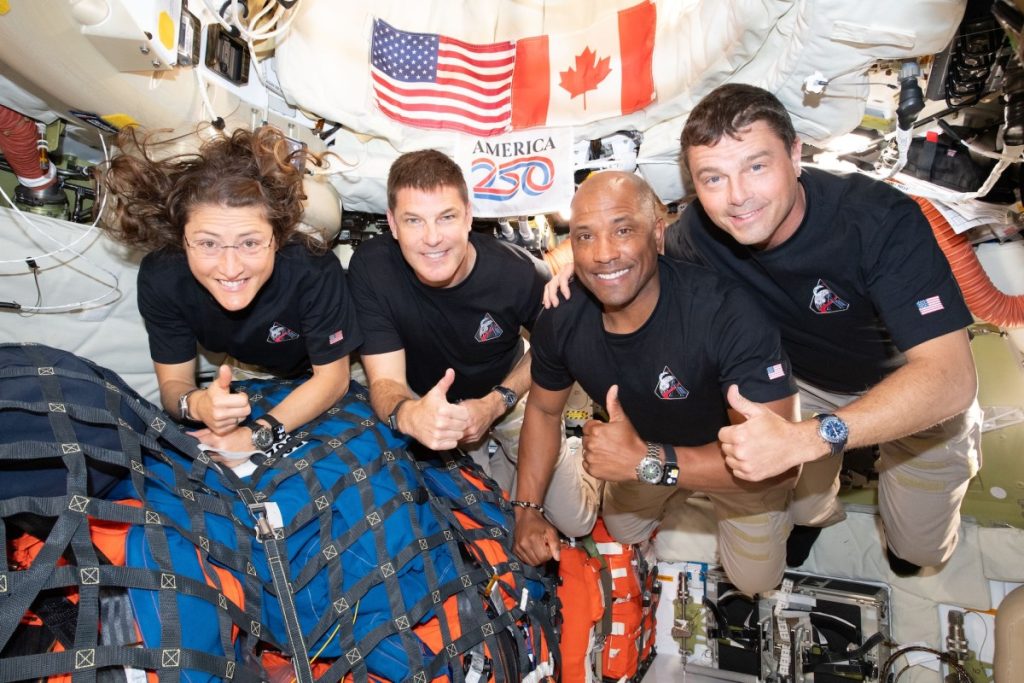
Following a groundbreaking 10-day journey to lunar orbit, four astronauts have successfully returned to Earth, marking a triumphant conclusion to humanity’s first crewed Moon mission in over five decades.
The Orion capsule, carrying the international crew, touched down safely in Pacific waters near San Diego at 5:07 p.m. Pacific Time. All four crew members—three from the United States and one from Canada—were reported in excellent health following what mission controllers described as a flawless water landing.
The historic crew included Commander Reid Wiseman, pilot Victor Glover, and mission specialists Christina Koch and Jeremy Hansen. Their spacecraft, dubbed Integrity, completed its ambitious lunar trajectory in just over nine days of flight time.
This landmark mission represented humanity’s return to lunar orbit after a half-century absence. The crew ventured further from Earth than any humans in history, reaching approximately 252,760 miles from their home planet. During their lunar flyby, the astronauts captured unprecedented imagery of previously unseen lunar terrain and had the extraordinary experience of witnessing a total solar eclipse from space.
The crew made several scientific observations during their journey, including the identification of new lunar craters. In a touching tribute, they named one crater after Commander Wiseman’s late wife Carroll, who passed away from cancer in 2020.
Space agency administrator Jared Isaacman praised the mission’s success, describing the crew as stellar ambassadors and calling the entire endeavor perfect. Isaacman, who has participated in private space missions himself, emphasized the significance of the achievement on social media platforms.
The administrator highlighted that this mission marked a pivotal moment for American space exploration, noting the nation’s renewed capability to send astronauts to lunar distances and return them safely. He acknowledged the inherent risks of the test flight, which pushed both the Space Launch System rocket and Orion spacecraft into the challenging deep space environment for the first time with a human crew.
Looking ahead, Isaacman credited the entire space agency workforce for the mission’s success and outlined ambitious future plans, including lunar surface operations, establishment of a permanent lunar base, and preparation for even more distant exploration targets.