U.S. Vice President Returns Home as Nuclear Negotiations with Iran Collapse
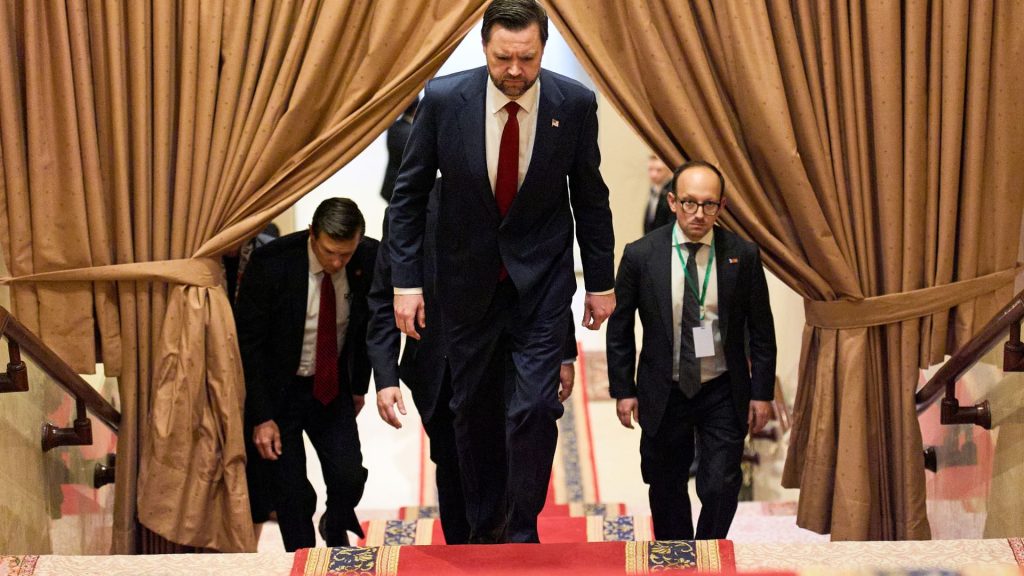
Vice President JD Vance announced the suspension of diplomatic talks with Iran early Sunday morning in Pakistan, citing Tehran’s refusal to abandon its nuclear weapons program as the primary obstacle to reaching an agreement.
Following 21 hours of intensive negotiations, Vance told reporters that while substantive discussions had taken place with Iranian representatives, no breakthrough was achieved. The central issue preventing progress was Iran’s unwillingness to commit to halting its nuclear weapons development.
“We require a clear commitment that they will abandon their nuclear weapons ambitions and refrain from acquiring the technology that could rapidly advance such capabilities,” Vance explained during a press briefing. He emphasized this represented a fundamental objective that President Donald Trump had prioritized for the negotiations.
Throughout the extended talks, Vance maintained regular contact with senior administration officials, including multiple conversations with Trump, Secretary of State Marco Rubio, Treasury Secretary Scott Bessent, and Admiral Brad Cooper of U.S. Central Command. The vice president was accompanied by special envoy Steve Witkoff and presidential son-in-law Jared Kushner.
Before departing Pakistan, Vance presented what he described as a final proposal to Iranian negotiators, though he expressed uncertainty about whether Tehran would accept the terms. The American delegation subsequently boarded Air Force Two in Islamabad.
The Iranian negotiating team, headed by Parliament Speaker Mohammad Bagher Qalibaf, expressed skepticism about American intentions, referencing past conflicts as grounds for distrust. Qalibaf indicated on social media that Iranian representatives had presented forward-looking proposals but questioned whether the United States could earn Iran’s confidence.
Iranian state media attributed the breakdown to what they characterized as excessive American demands, including issues related to nuclear materials removal and the reopening of the Strait of Hormuz shipping lane. Despite the impasse, Iranian officials suggested talks could resume after a brief pause.
Pakistani Foreign Minister Ishaq Dar offered his country’s continued assistance in facilitating future dialogue between the two nations, emphasizing the importance of maintaining the existing ceasefire agreement.
The negotiations occurred against the backdrop of ongoing regional tensions, with Iran continuing to restrict maritime traffic through the strategically vital Strait of Hormuz. This waterway serves as a critical passage for approximately 20 percent of global oil and natural gas shipments.
U.S. naval forces have begun operations to clear Iranian-placed mines from the strait, with two guided-missile destroyers successfully transiting the waterway. The USS Frank E. Peterson and USS Michael Murphy conducted these missions as part of broader efforts to restore commercial shipping routes.
Admiral Cooper announced plans to establish new safe passages for maritime commerce, while President Trump emphasized that mine-clearing operations would continue regardless of negotiation outcomes. However, Iranian Revolutionary Guard forces have warned against military vessel transits, threatening strong responses to such activities.
The shipping restrictions have significantly impacted global energy markets, with oil prices rising due to supply disruptions. Three large oil tankers managed to pass through the strait on Saturday, marking the first successful commercial transits since the ceasefire began.
These vessels, including ships carrying crude oil from Saudi Arabia, the United Arab Emirates, and Iraq, represent a combined capacity of approximately 6 million barrels. The successful passages suggest potential progress in reopening this crucial trade route.
Meanwhile, separate diplomatic efforts are planned between Israel and Lebanon, though domestic opposition in Lebanon has complicated these arrangements. The Lebanese government has postponed participation due to internal political circumstances.
Religious leaders have also weighed in on the regional crisis, with Pope Leo XIV calling for an end to what he termed the “delusion of omnipotence” driving current conflicts. The pontiff conducted a prayer service at St. Peter’s Basilica, urging political leaders to pursue peaceful negotiations.
As the fragile ceasefire continues, questions remain about long-term stability in the region and whether diplomatic channels can eventually bridge the significant gaps between American and Iranian positions on nuclear issues and maritime security.