Creator of Viral AI-Generated Block-Style Videos Reveals Government Connections
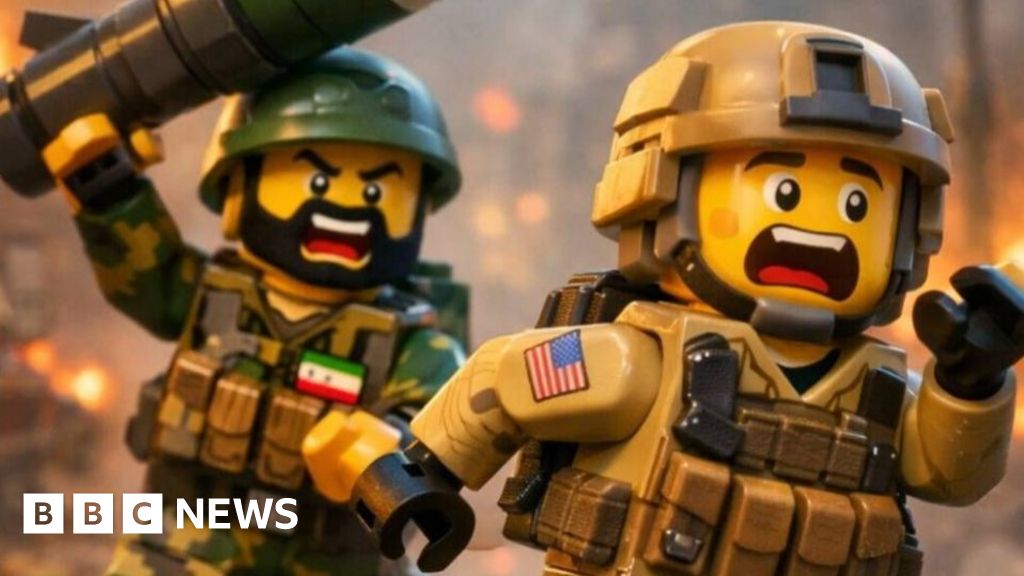
Colorful animated videos resembling popular building block toys have been spreading rapidly across social media platforms, featuring dramatic scenes of conflict, political figures, and current events. These AI-generated clips, while appearing playful at first glance, carry sophisticated propaganda messages supporting Iranian government positions.
The creator behind these viral videos, who identifies himself only as “Mr Explosive” from Explosive Media, recently confirmed what experts had long suspected: his operation receives direct funding from the Iranian government. This admission marks the first time he has publicly acknowledged this relationship, despite previously claiming complete independence.
Strategic Visual Communication
The videos employ the universally recognizable aesthetic of interlocking plastic building blocks to deliver political messages. According to the creator, this visual style was chosen because it functions as a “world language” that transcends cultural barriers. The content regularly appears on state media channels and reaches millions of viewers through various social platforms.
These productions feature a small team of fewer than ten people who create content that positions Iran as a defender against perceived global oppression. The videos often include references to controversial political figures and events, mixing factual elements with unsubstantiated claims and conspiracy theories.
Expert Analysis of Digital Propaganda
Propaganda specialists describe this phenomenon as far more sophisticated than traditional “AI slop” content. Dr. Emma Briant, a leading expert in the field, emphasizes that these videos represent a highly advanced form of digital influence operations that have garnered hundreds of millions of views during recent conflicts.
The artificial intelligence tools used to create this content have been primarily trained on Western data, making them particularly effective at producing culturally relevant material for English-speaking audiences. This represents a significant advancement for authoritarian governments seeking to influence Western public opinion.
Rapid Response Capabilities
The production team demonstrates remarkable speed in creating content that responds to current events. Videos often appear within hours of major developments, sometimes even before official announcements are made. This real-time propaganda capability represents a new form of digital diplomacy that bypasses traditional media channels.
The content frequently depicts military scenarios and geopolitical events with varying degrees of accuracy. When confronted about factual discrepancies, the creator maintains alternative narratives that often contradict official reports and verified information.
Impact on Information Warfare
Cyber warfare experts characterize these tactics as “defensive memetic warfare,” where creators view their work as necessary counter-messaging against opposing political rhetoric. The approach represents a shift from traditional diplomatic communication to direct audience engagement through viral content.
Dr. Tine Munk from Nottingham Trent University notes that this form of communication eliminates intermediaries like traditional press and mass media, creating a direct channel between state actors and global audiences. However, this approach also increases risks of misinterpretation and potential escalation of tensions.
Platform Response and Persistence
Social media companies have attempted to remove accounts sharing these videos, but new channels emerge rapidly to replace banned content. This cat-and-mouse dynamic demonstrates the resilience of modern propaganda operations and the challenges platforms face in content moderation.
The creator operates from a region where internet access is heavily restricted for ordinary citizens, claiming to use special “journalist internet” permissions granted by authorities. This selective connectivity highlights the controlled information environment in which these operations function.
Broader Implications
The success of these block-style propaganda videos illustrates how artificial intelligence has democratized sophisticated influence operations. State and non-state actors can now produce high-quality, culturally targeted content at unprecedented scale and speed.
According to experts, this represents a fundamental shift in information warfare that blurs traditional understanding of international communication and diplomacy. The phenomenon creates what researchers describe as a “limbo” state where traditional diplomatic norms no longer apply, potentially increasing global instability through miscommunication and misunderstanding.