Honda Prelude: The Technical Masterpiece That Shaped Sports Coupe Evolution
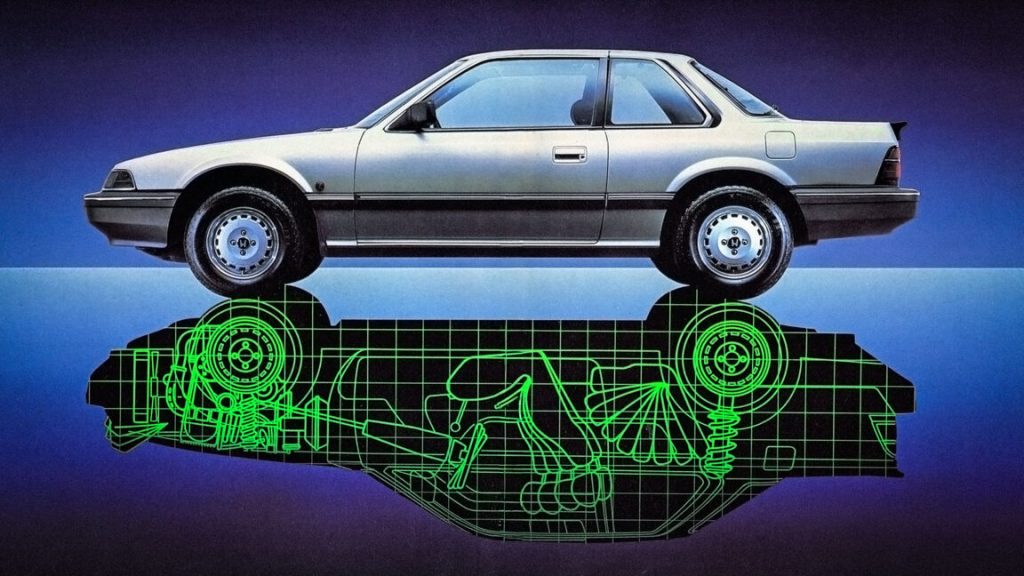
The Honda Prelude represented far more than conventional automotive design. This sports coupe served as Honda’s technological showcase, embodying the company’s commitment to engineering excellence and innovative solutions wrapped in an accessible package that aspired to greatness.
After disappearing from showrooms for over twenty-five years, the Prelude nameplate returns in 2026, bringing with it decades of automotive heritage. This revival represents more than mere nostalgia—it reflects Honda’s institutional knowledge and dedication to principles that defined the original: sophisticated engineering over raw power, technological advancement over superficial styling, and pursuit of mechanical refinement even when market trends suggested otherwise.
The original Prelude’s emergence during challenging economic times may explain its focused, purposeful character from inception.
Born During Economic Uncertainty
The Honda Prelude’s debut occurred amid significant global financial instability, as the automotive industry grappled with fundamental changes that threatened established business models.
The crisis began in August 1971 when President Nixon abandoned the gold standard, dismantling the Bretton Woods monetary system that had governed international commerce since World War II’s end. By 1973, currency devaluation was complete, floating exchange rates replaced fixed ones, and the yen’s value surged, making Japanese exports significantly more expensive while disrupting corporate planning.
The 1973 oil embargo intensified these pressures. OPEC’s production cuts drove energy costs skyward, creating additional uncertainty about consumer demand. Honda Motor Company faced particular vulnerability with approximately 60 percent of sales dependent on American markets. Currency appreciation compressed profit margins while rising fuel costs threatened sales volume, exposing Japan’s export-dependent strategy.
Corporate leadership transitions accompanied these external pressures. Company founders Soichiro Honda and Takeo Fujisawa stepped down from the organization they had built, leaving behind an enterprise employing 18,000 workers with 19.5 billion yen in capital. Scale provided no protection against global economic forces—it merely amplified the consequences.
Kiyoshi Kawashima, serving as Honda R&D president and senior managing director, implemented the New Honda Plan as a comprehensive corporate restructuring. Management systems would be modernized, decision-making processes streamlined, and most importantly, Honda would pursue global expansion rather than simple export strategies in an increasingly unstable currency environment.
Facing floating exchange rates and volatile energy prices, Honda selected innovation over withdrawal. The Prelude would exemplify this strategic shift, demonstrating that disciplined engineering and thoughtful design could succeed despite turbulent conditions.
Honda’s Strategic Evolution
Honda’s American market entry began with motorcycles in 1959. The N600 automobile followed a decade later, featuring two cylinders, compact dimensions, and ambitious goals. As economic turbulence intensified in 1973, Honda launched the Civic: a larger, four-cylinder, efficient hatchback perfectly suited to contemporary challenges. The more substantial Accord arrived in 1976, positioned as Honda’s first genuine global vehicle.
Both models utilized Honda’s CVCC engine technology, which achieved compliance with stringent 1970 Clean Air Act emissions standards without requiring catalytic converters. This engineering breakthrough employed elegant simplicity: a spark plug ignited enriched fuel mixture in a small prechamber, which subsequently ignited leaner mixture in the main cylinder, producing cleaner combustion without expensive additions. During an era characterized by energy crises and regulatory pressure, Honda chose engineering solutions over political lobbying.
Having established credibility through practical transportation, Honda then pursued a seemingly irrational project: developing a sports coupe.
The 1978 first-generation Prelude combined angular and streamlined design elements, utilizing Accord underpinnings in a tighter, shorter, more purposeful package. Honda adapted the sedan’s suspension, braking system, and 1.8-liter engine to a chassis with wheelbase reduced by 2.4 inches. Performance remained modest: 72 horsepower and 94 pound-feet of torque from a single-overhead-cam four-cylinder, paired with five-speed manual or two-speed automatic transmission (later upgraded to three speeds), delivering power to front wheels. Zero-to-sixty acceleration required approximately 19 seconds, hardly inspiring performance. Despite premium pricing that didn’t justify the driving experience, sales remained limited, but Honda was establishing foundations for future development.
Finding Its Identity
Honda truly reimagined the Prelude’s potential in 1983, treating it as distinct ambition rather than modified Accord variant. This generation marked a crucial turning point, demonstrating the company’s commitment to developing the model as unique proposition.
Power increased to 100 horsepower, while sharp, wedge-shaped styling provided dramatic departure from previous excess. Pop-up headlights became signature design elements, creating cleaner, more contemporary appearance that looked unmistakably forward-thinking. This generation established groundwork for the significant 1985 Prelude Si.
The Si variant featured a larger, fuel-injected 2.0-liter four-cylinder producing 110 horsepower and 114 pound-feet of torque, elevating the Prelude into serious performance territory. Zero-to-sixty times dropped into the nine-second range, representing meaningful achievement in mid-1980s sport-compact calculations.
The third-generation Prelude’s 1988 debut suggested evolutionary rather than revolutionary styling, wearing carefully refined silhouette. However, beneath conservative exterior changes, Honda prepared far more significant technological statement.
This generation established the Prelude’s reputation as technological innovator, becoming America’s first production car offering four-wheel steering. This audacious engineering achievement operated through pure mechanical simplicity: at low speeds, rear wheels turned opposite to front wheels, tightening rotation; at higher speeds, they turned in the same direction, enhancing stability.
Base power came from single-overhead-cam 2.0-liter four-cylinder producing 109 horsepower and 111 pound-feet of torque, available with four-speed automatic or five-speed manual transmission. The Si’s dual-overhead-cam variant delivered 135 horsepower and 127 pound-feet of torque, increasing to 140 horsepower by 1990, reinforcing the Prelude’s evolution from stylish coupe to legitimate sport-compact competitor. The Honda Prelude Si 4WS became the flagship trim level.
Technological Innovation Continues
When the fourth generation arrived in 1992, Honda maintained long-nose, short-deck proportions while reinterpreting the design language. Sharp creases and pop-up headlights disappeared, replaced by fixed lighting and softer, more fluid sheet metal, as if the vehicle had been sculpted into more aerodynamic form. The most significant advancement came the following year.
Honda introduced the Prelude VTEC in 1993, featuring Variable Valve Timing and Lift Electronic Control technology that would become legendary among enthusiasts. While the 1980 Alfa Romeo Spider 2000 first offered variable-valve timing in America, Honda’s system advanced the concept significantly. At higher engine speeds, aggressive cam profiles held valves open longer and wider for maximum performance, while lower rpm operation used conservative valve timing prioritizing efficiency. Today’s ubiquitous variable-valve timing seemed revolutionary then, effectively providing dual engine personalities within single powerplant. Following four-wheel steering innovation, VTEC further established the Prelude’s identity as Honda’s technological laboratory, previewing engineering futures.
The base S model featured 135-horsepower single-overhead-cam four-cylinder, maintaining Honda’s disciplined approach. Si or SE variants rewarded buyers with 2.3-liter four-cylinder producing 160 horsepower, sharpening the Prelude’s character without sacrificing daily usability. The range-topping VTEC model represented Honda’s engineering confidence pinnacle, with 2.2-liter dual-overhead-cam four-cylinder delivering 190 horsepower, placing the Prelude firmly in sport-compact territory. This was the fullest realization of the car’s dual personality: civilized at low revs, urgent when pushed.
Available through 1996, this generation also marked an experiment’s end. Four-wheel steering, once the Prelude’s technological signature, quietly disappeared—foreshadowing future developments.
Final Evolution
The fifth-generation Prelude’s 1997 arrival featured styling that seemed to compromise between eras, returning to Honda’s earlier angular discipline while softening edges for late-1990s preferences. It appeared modern yet cautious, and fundamental changes lay beneath the surface.
For the first time in years, Prelude ambitions narrowed. A single engine option emerged: 195-horsepower 2.2-liter four-cylinder, paired with five-speed manual or four-speed automatic transmission. The simplified menu perhaps reflected strategic thinking.
Four-wheel steering vanished, replaced by Type SH featuring Honda’s Active Torque Transfer System (ATTS). Electromechanical clutches directed additional torque to outside front wheels during cornering, sharpening turn-in response and approaching rear-wheel-drive balance. Modern terminology calls this torque vectoring; then, it represented costly, heavy experimentation proving too sophisticated for practical application. Few buyers selected this option, and the Prelude gradually faded.
Production ended in June 2001 after selling 826,082 Preludes in America. Sales peaked in 1986 with 79,841 units, then declined steadily, pressured by internal competition from Accord Coupe, Civic Coupe, and Acura Integra, plus market shifts toward sport-utility vehicles. By early 2001’s first five months, only 3,500 Preludes sold. The former technological showcase exited quietly—less failure than casualty of changing preferences, as its innovations entered mainstream automotive development.
Revival Strategy
Approximately 25 years later, Honda revived the Prelude nameplate, representing calculated strategy rather than sentimental gesture in an automotive industry dramatically transformed from the Prelude’s original era.
Today’s automotive sector, once defined by horsepower, styling cycles, and incremental engineering progress, now operates on software, batteries, and geopolitical considerations. Tesla forced established manufacturers to adopt technology company thinking. China emerged as manufacturing and innovation superpower, not merely market destination. Governments became effective product planners through emissions regulations and subsidies, pushing manufacturers toward electrification regardless of readiness.
Simultaneously, automotive manufacturing economics became increasingly demanding. Development costs soared while margins compressed, making scale more critical. Against this backdrop, reviving legacy nameplates transcends branding exercises, testing whether nostalgia can coexist with industries operating on code, capital, and political risk. This context explains the 2026 Honda Prelude’s return.
Economic Logic Drives Return
With internal rivals eliminated—Accord Coupe discontinued in 2017, Civic Coupe following in 2020—the Prelude returned first as 2023 concept, then production vehicle. Honda reenters a segment it largely abandoned after clearing competitive clutter from its own showrooms.
The revival reflects broader industry strategy: minimizing investment while maximizing brand leverage. The new Prelude uses shortened Civic platform, Civic Hybrid drivetrain, and Civic Type R suspension components. Honda reengineered and retuned these elements, but the approach is clear: contain development costs, preserve margins, and distribute research across maximum units.
Honda discontinued the previous Prelude after approximately 3,500 annual sales. The new target of 4,000 yearly units suggests management isn’t betting on coupe revival but testing market waters. In an American market dominated by high-margin SUVs and pickup trucks, the Prelude functions as controlled brand halo: testing whether nostalgia delivers incremental profit without jeopardizing capital investment. The vehicle represents less throwback than case study in how legacy manufacturers balance emotion with financial reality.
In this regard, the 2026 Honda Prelude continues predicting automotive futures.